Expert Advice, No Cost – Schedule Your Free Consultation!

REJU EXOSOME THERAPY

Exosome Therapy

Medically reviewed by the Reju medical team · Last updated November 4, 2026
The Messengers Behind Stem Cells, Delivered in Concentrated Form

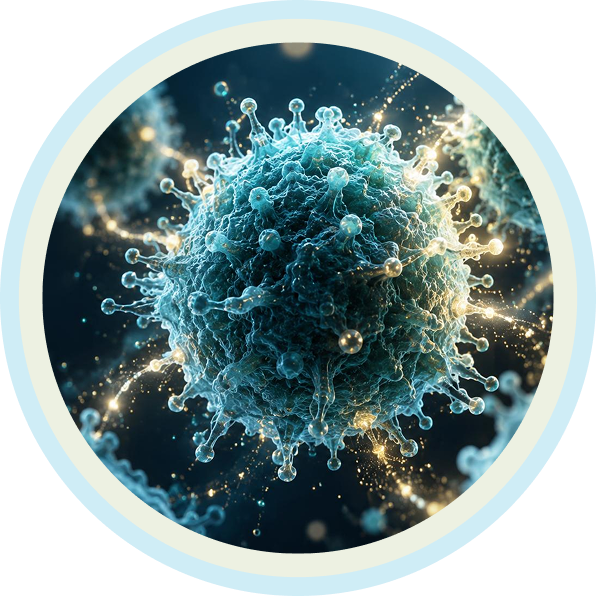
Exosomes are tiny messengers that stem cells release to communicate with other cells. Reju’s exosome therapy delivers them in an isolated, concentrated form, most often alongside stem cell therapy, as part of a personalized plan. Care is coordinated through Reju partner clinics or in-home visits. In-home care is available across the continental U.S. when clinically appropriate. Hawaii and Alaska are considered case by case.
800+ Patients Supported
Umbilical Cord MSC-Derived
Every Batch Tested

Partner Clinics & In-Home Care

What Are Exosomes?

Every cell in your body talks to its neighbors. One way it does that is by releasing exosomes: microscopic, bubble-like packages, far smaller than a cell, that carry instructions from one cell to another.
Mesenchymal stem cells (MSCs) are especially active senders. Researchers now believe that much of what makes MSCs interesting comes not only from the cells themselves, but from the exosomes they release.
Reju’s exosomes are MSC-derived and come from umbilical cord tissue (Wharton’s jelly), the same type of tissue source used for our stem cells, whether you receive care at our Miami partner clinic, another location or at home.

Exosomes vs. Stem Cells: What's the Difference?

Stem cells produce and release exosomes naturally, but they do it gradually, over time, after they are in the body. With exosome therapy, the exosomes are collected, isolated and concentrated ahead of time, then delivered directly.
That means a patient can receive a larger volume of exosomes at once than they would get by waiting for stem cells to release them on their own. That’s why our medical team usually recommends exosomes together with stem cells (in about 99% of plans): the stem cells work over time, and the exosomes add a concentrated amount of the same cell signals at the start.
Exosomes can also be used on their own when your physician decides that’s the better fit.

Stem cells alone

Release exosomes gradually, over time.

Stem cells + exosome therapy

Concentrated exosomes delivered at once, plus stem cells that keep releasing them.

What Research Has Observed

Exosome science is still young. Here’s what researchers have observed so far, in plain language.

Anti-inflammatory signaling

In laboratory and early clinical research, MSC-derived exosomes have been observed to carry signals associated with calming excess inflammation. Researchers are studying whether this may support the body in conditions where inflammation plays a role.

Crossing the blood-brain barrier

The brain is protected by a tight filter called the blood-brain barrier, which keeps most substances out. Because exosomes are so small, lab and animal studies suggest they may be able to pass through it, which is one reason they are being studied in neurological research.

Repair and regeneration signaling

Exosomes have been observed to carry the kinds of signals cells use to coordinate repair. Research suggests they may support the body’s own natural repair processes, rather than replacing tissue themselves.

Carrying cytokines and growth factors

Cytokines are small proteins cells use to send messages, especially to the immune system, for example “turn inflammation up” or “turn it down.” Growth factors are proteins that tell cells when to grow, divide or repair. Exosomes carry both, packaged and protected, which is why researchers describe them as the delivery system for a stem cell’s messages.

Areas Where Exosomes Are Being Explored

Because exosomes are a stem cell’s own messengers, they are explored alongside stem cell therapy in nearly every area we support. These are areas of ongoing research and individualized care, not promises of results. Your medical team decides whether exosomes fit your plan. See all conditions we support.

Joints & Knees

Studied for their signaling role in knee and joint tissue.

Arthritis

Researched for their anti-inflammatory signaling in joints.

Back, Spine & Disc

Explored for supporting the repair environment around discs.

Athlete Injuries

Studied for recovery signaling after sports injuries and tissue strain.

Chronic Pain

Researched for their role in inflammatory signaling linked to pain.

Autoimmune

Studied for their role in immune signaling.

Neurological Conditions

Explored in early research because they may cross the blood-brain barrier.

Diabetes (T1 & T2)

Studied in early research on pancreatic and metabolic signaling.

Hair Restoration

Researched for growth-factor signaling around hair follicles and hair loss.

Sexual Wellness

Studied for their role in tissue and blood vessel signaling.

Longevity Program

Explored for the body’s natural renewal signaling as part of healthy aging.

All Other Conditions

Ask our team whether exosomes may fit your plan.

How Exosome Therapy Is Given

How exosomes are given depends on your goals and your doctor’s recommendation. Your plan may use one method or a combination. Exosomes can also be part of a broader immune-support plan alongside NK therapy.

Exosome IV Therapy

Exosome IV therapy delivers exosomes through a vein for whole-body (systemic) distribution.

Targeted injection

Delivered directly to a specific area, such as a joint.

Nebulizer

Inhaled as a fine mist.

Quality You Can See in the Numbers

Each batch of Reju exosomes is independently tested and must meet set specifications before it can be used. Every batch goes through particle sizing and counting, sterility testing, mycoplasma testing and endotoxin testing before release. Results from a recent batch:

About 157 nanometers

The average exosome in a recent batch measured about 157 nanometers across (most between roughly 103 and 226). That’s about 500 times thinner than a human hair.

Over 15 billion particles per mL

Every batch is counted. A recent batch measured about 15.8 billion particles per milliliter, more than three times the 5-billion minimum it must meet.

Tested sterile

Sterility testing showed no microbial growth, and mycoplasma (a common contaminant) tested negative.

Low endotoxin

Endotoxin, a bacterial byproduct screened for in injectable products, measured below 0.63 EU/mL, under the release limit of 0.92.

Clean-room filling

Vials are filled in a Grade A environment, with air and operator-glove checks during filling showing no detectable microbial growth.

Independent testing

Quality tests are performed by external laboratories, and each batch must meet its specifications before release.

Exosome Therapy Near You: Clinics & In-Home Care

Reju coordinates exosome therapy across the U.S. It’s available at every partner clinic and through in-home care:

Exosome Therapy Cost

Pricing varies by plan, but exosome therapy typically starts at $7,000 to $9,000 and goes up from there. For an exact quote based on your goals, schedule a free consultation or call (646) 798-1278.

Flexible Payment Plans

Financing is available for qualifying individuals through our partner Cherry.

See If You Qualify

Financing through Cherry and its lending partners. Approval, rates and terms depend on eligibility. No hard credit check to see if you qualify.

Take the Next Step

1. Schedule Your Free Consultation

Our advocate team reviews your health history and goals with you, at no cost.

2. Medical Review

Our medical team designs a personalized plan, including whether exosomes, stem cells or both are recommended, and how they’d be given.

3. Receive Care Near You

Receive care at a partner clinic in Miami, Salt Lake City, New York or Newport Beach, CA, or through in-home care, available in nearly every state.

4. Follow Up

Our team stays available after care for scheduled check-ins and questions.

Exosome Therapy FAQs

Exosome therapy is the delivery of concentrated exosomes, the tiny messenger particles stem cells release, to support the body’s own cell-to-cell signaling. Reju uses MSC-derived exosomes from umbilical cord tissue (Wharton’s jelly), most often alongside stem cell therapy.

Exosomes work by carrying cytokines, growth factors and other signals from one cell to another. Research suggests these signals may support inflammation balance and the body’s natural repair processes.

Stem cells are living cells; exosomes are the messengers stem cells release. Stem cells release exosomes gradually over time, while exosome therapy delivers a larger, concentrated amount at once, which is why the two are often used together.

Most of the time they’re used together. About 99% of Reju plans that include exosomes pair them with stem cells, but exosomes can be used on their own when the doctor recommends it.

Exosome IV therapy delivers exosomes through a vein so they circulate throughout the body. Your physician decides whether IV, targeted injection, nebulizer or a combination fits your plan.

Exosome therapy is given by IV infusion, targeted injection or nebulizer, depending on your doctor’s recommendation.

No. Exosome therapy is not FDA-approved for the conditions discussed on this page and is considered investigational. Your medical team will review what is and isn’t known during your consultation.

Research suggests they may. Because exosomes are extremely small, lab and animal studies have observed them crossing the blood-brain barrier, which is why they are being researched in neurological conditions.

Exosome therapy is still being studied, and long-term safety data are limited. Every Reju exosome batch is tested for sterility, endotoxin and mycoplasma and must meet release specifications before use. As with any procedure, there can be risks; your doctor will review them with you and decide whether it’s appropriate for you.

Pricing varies, but exosome therapy typically starts at $7,000 to $9,000 and goes up from there. Your cost depends on your personalized plan, including whether exosomes are combined with stem cells, the delivery method and the number of sessions. For an exact quote, schedule a free consultation or call (646) 798-1278.

Reju coordinates exosome therapy through partner clinics and in-home visits. In-home care is available across the continental U.S. when clinically appropriate. Hawaii and Alaska are considered case by case. Schedule a free consultation to discuss the appropriate care option.

Patient Stories & Experiences

Hear from people who chose to explore regenerative medicine.
Exosome and stem cell therapies are investigational and not FDA-approved for the conditions on this page. Research described here is early, results vary, and no outcome is guaranteed. This page is educational, not medical advice; a licensed physician decides eligibility.

Sources: Kalluri & LeBleu, Science, 2020; Nikfarjam et al., J Transl Med, 2020; Lee et al., Int J Mol Sci, 2024; Osaid et al., Int J Mol Sci, 2023

Search on Reju Stem Cells