Expert Advice, No Cost – Schedule Your Free Consultation!

Reju NK Therapy

Autogolous
NK therapy

Introduction

The average adult produces around 5,000 cancerous cells every day. To combat these cancerous cells, your immune system produces Natural Killer (NK) cells. These NK cells serve as the body’s frontline defenders, playing a critical role in preventing the development and spread of cancer cells.

However, there are instances when the performance of NK cells may be suboptimal, especially during times of immune system stress. It is virtually impossible to completely shield oneself from harmful pathogens, bacteria, and viruses. Therefore, the human body has evolved to include specialized immune cells that work collaboratively to prevent and combat diseases.

The immune system consists of eight distinct types of white blood cells, among which lymphocytes are key players responsible for protecting the body against viruses, pathogens, cancerous cells, and foreign entities. These lymphocytes are adept at detecting and identifying antigens before cells become infected and are proficient at eliminating already infected or cancerous cells. There are three primary subtypes of lymphocytes:

T Cells

These cells not only eliminate infected cells but also serve as alarm signals to alert other immune cells about the presence of pathogens in the body.

B Cells

These cells produce antibodies that aid in countering diseases and play a pivotal role in establishing long-term immunity.

NK Cells

Found circulating in the bloodstream, NK cells are responsible for identifying and destroying cancerous cells or cells containing viruses.

What are NK cell?

Natural Killer cells (NK cells) are recognized as one of the immune system’s most potent defenses. They actively patrol the bloodstream, searching for tumor cells and cells infected with viruses. When NK cells encounter such cells, they surround and eliminate them by releasing chemicals that break down the membrane of the diseased cells, resulting in their destruction.
 
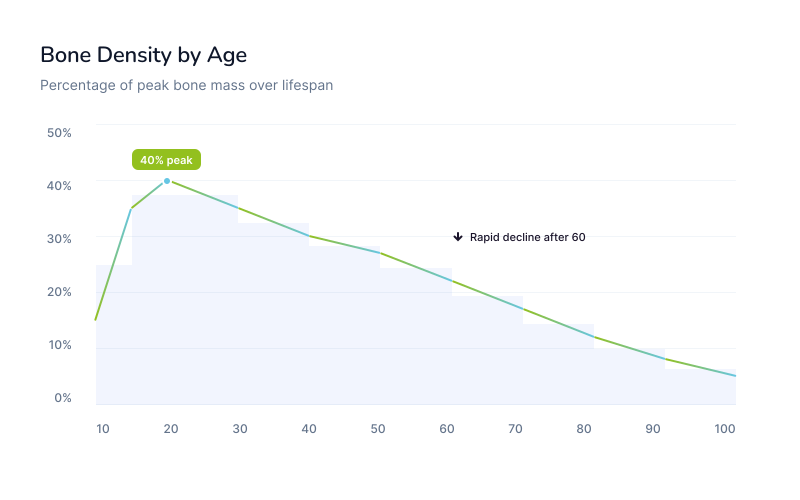
However, it’s important to note that the effectiveness of NK cell functions tends to decline with age.

How does this
impact our body?

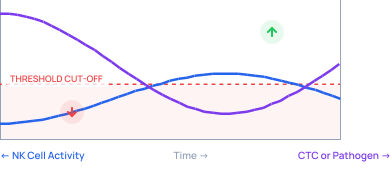
As individuals age or are exposed to stress, their NK cells may become less effective. This decreased efficiency can compromise the immune system, potentially allowing mutated cells to evade the body’s defenses and develop into life-threatening cancers.
 
In a healthy individual, NK cells would promptly detect and eliminate cancerous cells, preventing harm from occurring.
 
Having a high level of active NK cells in the body is a crucial indicator of a robust immune system, which in turn signifies overall health. A strong immune system reduces the likelihood of illness and degeneration into a diseased state.
 
When the power of NK cells weakens, abnormal cells can accumulate, which is a significant factor triggering cancer development. In a state of health, immune cells actively safeguard the body and eliminate all cancer cells.
 
An NK activity value of more than 500 is indicative of an absence of cancer in the immediate term (within six months). NK Activity > 500 pg/ml has a Negative Predictive Value of 98%, which is the highest value among all cancer screening tests. Conversely, if NK Activity < 500 pg/ml is observed, it signifies abnormally low immunity, and the lower the value, the higher the likelihood of existing or future cancer.

Benefits of NK cell therapy

To prevent cancer and other diseases, it is crucial to bolster the defensive capabilities of the immune system. Cancer can only break through a naturally strong defense when the immune system weakens.
 
The introduction of elevated NK cell activity into the immune system can reduce the number of mutated cells in the body and prevent the growth of cancerous cells. Additionally, it can aid in the restoration of overall body strength, particularly after anticancer treatments such as radiation, by enhancing immunity.
 
Increasing NK cell activity can effectively prevent and combat cancer and other diseases, ultimately leading to improved health, quality of life, and longevity.

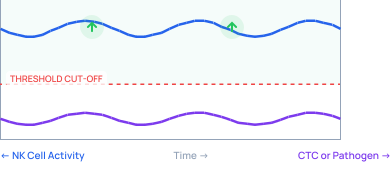
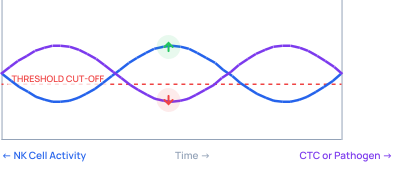
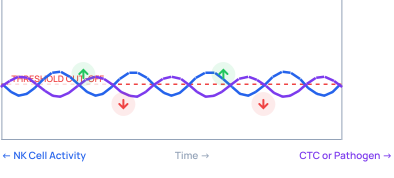
1. Normal

2. Temporarily Low

3. Borderline

4. Consistently Low

Autologous NK Therapy Procedure

Your NK Cells. Expanded. Returned to You.

Autologous NK therapy begins with the patient’s own blood. Natural Killer (NK) cells are isolated, expanded outside the body under controlled laboratory conditions, tested, and then returned to the patient through an IV infusion. Clinical studies of autologous NK therapy have used this same general blood collection → ex-vivo expansion → quality testing → reinfusion process. PubMed Central (PMC)
(https://pmc.ncbi.nlm.nih.gov/articles/PMC4548900/?utm_source=chatgpt.com)


1. Blood Collection — Day 1

A blood sample is collected from the patient. The patient’s immune cells are separated from the blood, including the NK cells that will be used to create their personalized cell product.


2. NK Cell Expansion — Approximately 2 Weeks

The patient’s NK cells are cultured and expanded under controlled laboratory conditions. Over approximately 14 days, a relatively small starting population can be expanded into a much larger population of NK cells. Two-week expansion periods have been reported in clinical autologous NK protocols. Frontiers (https://www.frontiersin.org/journals/immunology/articles/10.3389/fimmu.2022.940577/full?utm_source=chatgpt.com)


3. Quality & Release Testing

Before infusion, the final cell product undergoes quality-control testing. Depending on your actual lab protocol, this can include cell count, identity/purity, viability, sterility, mycoplasma, endotoxin and other predefined release criteria. PubMed Central (PMC) (https://pmc.ncbi.nlm.nih.gov/articles/PMC12924912/?utm_source=chatgpt.com)


4. NK Cell Infusion — Approximately Day 14


The patient returns for an IV infusion of their expanded autologous NK cells. The planned treatment dose is 1–3 billion NK cells, based on the patient’s prescribed protocol.

Why Autologous?

Because the NK cells originate from the patient’s own blood, the therapy uses their own immune cells rather than donor-derived NK cells.
After collection, those cells are expanded outside the body and prepared for reinfusion.

How can I naturally increase NK cells?

a) Dietary Compounds: Several dietary compounds are known to enhance NK cell activity. These include vitamins (with a focus on vitamin E), retinoid acid, ginseng, zinc, aged garlic, selenium, certain mushrooms (e.g., Agaricus blazei Murill), Ayurvedic herbs, and yeast (specifically B-glucan).
 
b) Lifestyle Habits: Various lifestyle habits are recognized for their ability to boost NK cell activity. These include engaging in moderate exercise, practicing yoga, maintaining proper hydration, fostering a positive mindset, embarking on forest hikes, ensuring adequate sleep and rest, and increasing antioxidant intake.

References

Roles of natural killer cells in antiviral immunity. Stephen N Waggoner, Seth D Reighard, Ivayla E Gyurova, Stacey A Cranert, Sarah E Mahl, Erik P Karmele, Jonathan P McNally, Michael T Moran, Taylor R Brooks, Fazeela Yaqoob, and Carolyn E Rydyznski.
https://www.ncbi.nlm.nih.gov/pmc/articles/PMC4821726/ 


Prospective study of percutaneous cryoablation combined with allogenic NK cell immunotherapy for advanced renal cell cancer Mao Lin, Kecheng Xu, Shuzhen Liang, Xiaohua Wang, Yinqing Liang, Mingjie Zhang, Jibing Chen, LiZhi Niu.
https://pubmed.ncbi.nlm.nih.gov/28274792/ 

Present and Future of Allogeneic Natural Killer Cell Therapy. Okjae Lim, Mi Young Jung, Yu Kyeong Hwang, and Eui-Cheol Shin.
https://www.ncbi.nlm.nih.gov/pmc/articles/PMC4453480/ 


Human Umbilical Cord Blood Serum/Plasma: Cytokine Profile and Prospective Application in Regenerative Medicine
Yu A Romanov, V V Vtorushina, T N Dugina, A Yu Romanov, N V Petrova. https://pubmed.ncbi.nlm.nih.gov/31761983/ 

Real People. Real Results.

Meet patients who now enjoy better health, more energy, less pain, and get more out of life thanks to advanced stem cell therapy for autoimmune and degenerative conditions.

Search on Reju Stem Cells