
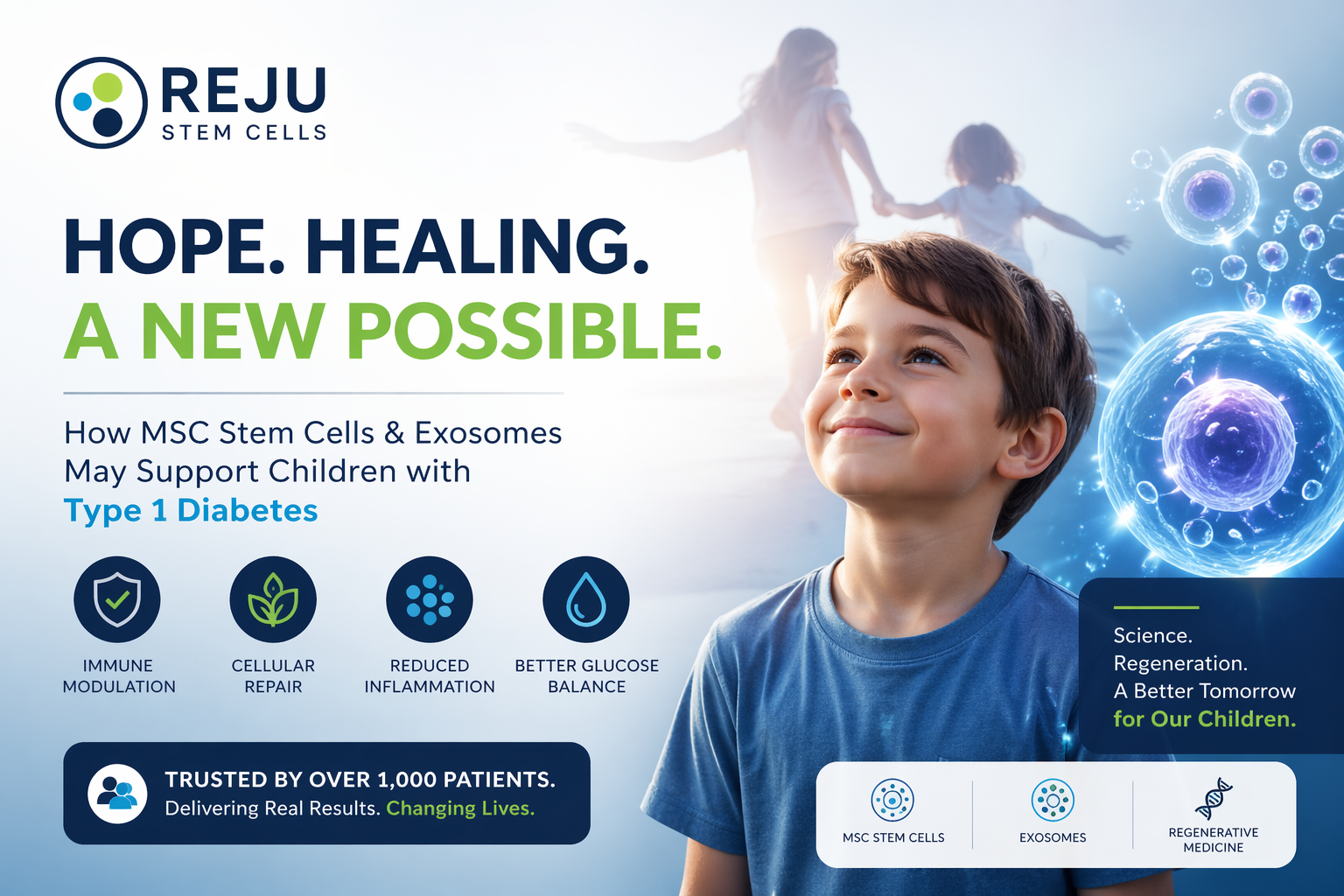
Type 1 diabetes (T1D) is one of the most challenging chronic conditions affecting children today. Unlike Type 2 diabetes, it is an autoimmune disease, where the immune system mistakenly attacks and destroys insulin-producing beta cells in the pancreas.
For families, this means lifelong insulin dependence, constant monitoring, and the looming risk of complications.
But what if we could do more than just manage symptoms?
Emerging research on mesenchymal stem cells (MSCs) and MSC-derived exosomes is opening the door to a new approach—one focused on immune modulation, cellular repair, and preservation of pancreatic function.
Understanding the Root Problem in Type 1 Diabetes
In children with T1D:
- The immune system attacks pancreatic beta cells
- Insulin production declines or stops completely
- Blood sugar becomes difficult to regulate
Traditional treatments (insulin therapy) do not stop the underlying autoimmune process or restore damaged cells.
That’s where regenerative medicine comes in.
What Are MSC Stem Cells?
Mesenchymal stem cells (MSCs) are powerful regenerative cells known for their ability to:
- Regulate immune system activity
- Reduce inflammation
- Promote tissue repair
- Support cell survival and regeneration
Recent clinical research shows MSC therapy may help preserve beta-cell function in Type 1 diabetes patients, rather than simply replacing insulin.
This is a critical shift—from management to potential intervention at the disease level.
The Real Power: Exosomes
While MSCs are important, much of their therapeutic effect comes from what they release—exosomes.
Exosomes are tiny signaling particles that act like biological “messengers,” carrying proteins, RNA, and growth factors to damaged cells.
Research shows that MSC-derived exosomes can:
- Support beta-cell survival and function
- Improve insulin sensitivity
- Reduce autoimmune-driven inflammation
- Help regulate the immune response attacking the pancreas
In fact, studies suggest exosomes may deliver equal or even superior therapeutic effects compared to stem cells themselves in some models of diabetes.
Why This Matters for Children
Type 1 diabetes often begins early in life, meaning:
- Longer disease duration
- Greater cumulative damage
- Higher risk of complications
MSC-derived therapies may be especially valuable in pediatric cases because they aim to:
1. Protect Remaining Beta Cells
Early intervention may help preserve insulin-producing cells before they are fully destroyed.
2. Calm the Autoimmune Response
MSC exosomes have demonstrated immunomodulatory effects in autoimmune diseases—including Type 1 diabetes.
3. Reduce Systemic Inflammation
Preclinical studies show exosomes can reduce inflammatory immune activity that contributes to pancreatic damage.
4. Improve Glucose Control
Animal models treated with MSC-derived extracellular vesicles showed reduced development of diabetes and improved glucose regulation.
What the Science Is Saying (And Not Saying)
It’s important to be clear:
- Most research is still preclinical or early-stage clinical
- This is not yet a cure
- Results vary depending on timing, patient condition, and treatment protocols
However, the direction is undeniable:
Regenerative therapies are targeting the root biology of Type 1 diabetes—not just the symptoms.
Our Clinical Experience
At our clinic, we’ve treated over 800 patients across a range of conditions using advanced stem cell and exosome protocols.
Among those, we’ve worked with individuals managing diabetes—including Type 1.
While every case is unique, we have observed:
- Improvements in glucose stability
- Reduced insulin requirements
- Better overall metabolic balance
- Enhanced quality of life markers
These outcomes align with what the research suggests:
that MSCs and exosomes may help support the body’s ability to regulate itself more effectively.
A New Frontier in Pediatric Diabetes Care
For decades, Type 1 diabetes has been considered a lifelong, irreversible condition.
Today, advances in regenerative medicine are exploring new possibilities for how the disease may be treated and managed.
By combining:
- Immune system regulation
- Cellular communication (exosomes)
- Tissue repair mechanisms
MSC-based therapies may represent one of the most promising advancements in how we approach this disease—especially in children, where early intervention could make the greatest difference.
Final Thoughts
We’re entering a new era where treatment isn’t just about replacing what’s lost—but helping the body restore balance from within.
For families navigating Type 1 diabetes, that shift matters.
And while more research is still needed, the science—and the clinical experience—is moving in a very promising direction.